
Passport OCR · ID card OCR · MRZ OCR
Passport OCR and ID card OCR that returns the fields, the MRZ and a fraud score
Upload a passport, a national ID card or a driver license as a photo, a scan or a PDF. Koncile returns every field as JSON, the machine readable zone line by line, and a score from 0 to 100 that says whether the document shows signs of modification. Built for KYC, onboarding and claims teams, by Koncile, Paris.
- No credit card
- Documents deleted after analysis
- SOC 2 Type II and GDPR
- Over 99 % on key identity fields
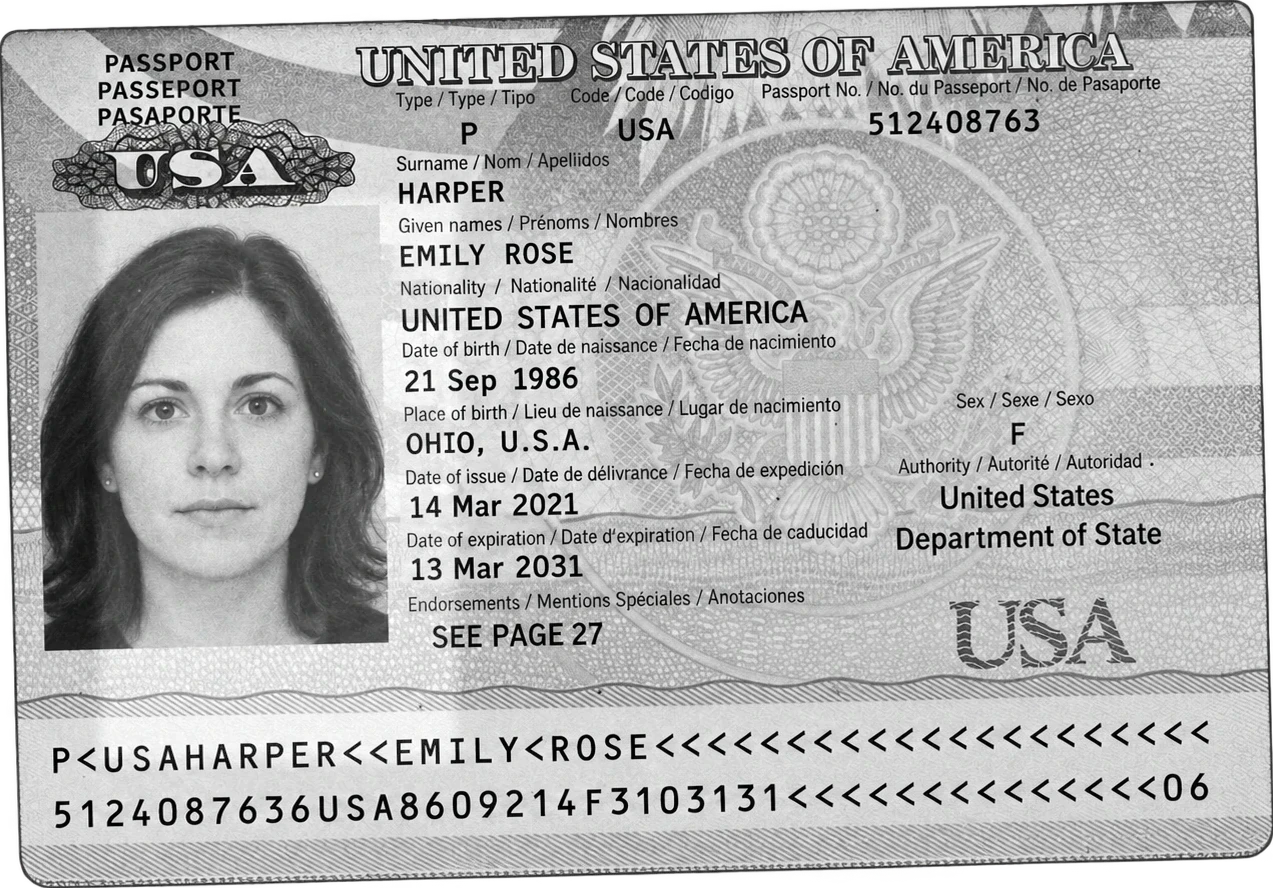
What is passport OCR, and why an ID card needs more than OCR
Three things to know before choosing a tool: what the software reads on the document, what it gives back to your system, and what it cannot tell you.
- 01
What it reads
Passport OCR (optical character recognition) reads the data page of a passport or the two sides of an ID card from a photo, a scan or a PDF: the printed fields (visual zone) and the machine readable zone (MRZ), the lines of characters at the bottom. The MRZ repeats the key fields in a fixed layout with check digits, which is why software reads it more reliably than the printed text.
- 02
What it returns
Not a block of text but named fields: surname, given names, document number, nationality, sex, dates of birth, issue and expiry, issuing country, and the MRZ lines as read. Each value comes with a confidence level, so your system can accept the sure ones and send the doubtful ones to a person. Koncile returns all of this as JSON, Excel or CSV.
- 03
What it does not tell you
Reading a document does not prove it is genuine, nor that the person holding it is its owner. That is why Koncile adds a control layer to the reading: the MRZ against the printed zone, the check digits, the file's own traces of editing, and a fraud score from 0 to 100. Face match, liveness and chip reading are a different job, done by identity verification tools.
What you get back for each document
Not a block of text to parse: named fields with the value read on the document, plus the controls that tell you whether to trust them. Field names and formats are yours to define in the template, with the ISO date format as the default.
Extracted fields sample passport
| given_names | JOHN MICHAEL |
| surname | DOE |
| document_number | 19AB12345 |
| nationality | FRA |
| sex | M |
| date_of_birth | 1993-03-03 |
| place_of_birth | Columbus, Ohio |
| date_of_issue | 2021-03-01 |
| date_of_expiry | 2031-03-01 |
| issuing_country | FRA |
| mrz_line_1 | P<FRADOE<<JOHN<MICHAEL<<<<<<<<<<<<<<<<<<<<<< |
| mrz_line_2 | 19AB123454FRA9303036M3103016<<<<<<<<<<<<<<02 |
Controls returned with the fields
- MRZ read in full, two lines for a passport (TD3), three lines for an ID card (TD1)
- Printed fields compared with the MRZ: name, number, birth date, expiry
- Expiry date checked against the day of analysis
- Document type and issuing country identified before extraction
- Signs of modification after issuance: metadata, editing software, fonts, photo retouching
12 / 100 Fraud score. 0 to 39 means no significant sign of modification, 40 to 79 means to check by hand, 80 and more means strong suspicion of modification after issuance.
Sample values. A score is a signal to verify, never an accusation: Koncile does not decide who is who, it tells you what the file shows. Face match, liveness and chip reading are not part of the service.
The identity documents Koncile reads
Passports and ID cards from any country whose documents follow the ICAO 9303 standard, which is the standard behind every machine readable passport. Documents without an MRZ are read from the printed fields alone.
Passports
The data page of any machine readable passport: visual zone and the two MRZ lines, with check digits recomputed. Photo, scan or PDF, one page or a full scanned file.
Passport OCR API →National ID cards
Front and back in one request. Three line MRZ (TD1) for European cards such as the French CNI, or printed fields only for cards without an MRZ.
ID card OCR →Driver licenses and residence permits
Licence number, categories, dates and address, in the layout of each country. Residence permits are read like ID cards, MRZ included when present.
The rest of the file
Proof of address, bank statement, payslip, tax notice: the same account reads the other documents of a KYC file and controls them with the same fraud score.
Document fraud detection on koncile.ai →How passport OCR works with Koncile
Three steps, no training phase on your side. The default passport and ID templates work from the first document; you adjust the fields when your process needs more.
- 01
Send the document
From the web interface, by email import, or through the API with a presigned upload. PDF, JPG and PNG up to 20 MB. Both sides of an ID card go in the same request.
- 02
Koncile reads and controls
The document is classified (passport, ID card, license), each field is extracted according to the template, the MRZ is parsed, and the fraud analysis runs on the same pass. Under a few seconds per page.
- 03
Get the result where you need it
JSON through the API or a webhook, Excel and CSV exports, or a push to your CRM or KYC platform. Low confidence values are flagged so a person checks only those.
Not only OCR: a control layer on every identity document
Reading the fields is the easy part. What costs money in a KYC or claims process is a passport that was edited before being sent. Koncile applies the same controls to identity documents as to bank statements and payslips.
File forensics on PDFs
Metadata, producer software, incremental saves, fonts that differ from the issuer's: the signs that a native PDF was opened and modified after it was issued.
K-Detect on photos and scans
Koncile's own models, trained on real forged documents, detect photo retouching and images generated or partly generated by AI.
Consistency between zones
The MRZ, its check digits and the printed fields must tell the same story. A name that differs between the two, or a check digit that does not match, raises the score.
The limit, stated plainly: a scan of a well made physical forgery can pass these controls, and a genuine document photographed badly can get a middle score. The score tells you where to look; a human decision stays yours.
The passport OCR API
One endpoint to upload, one to read the result. Templates and fields are managed in the interface, so a change in your fields never needs a deployment on your side.
- REST API with API key, presigned upload for large files
- Webhook when the document is done, or polling on the document id
- Same response format for every document type: status, document_id, general_fields and the fraud result
- Rate limits and duplicates handled on Koncile's side
curl -X POST https://api.koncile.ai/v1/upload \
  -H "Authorization: Bearer $KONCILE_API_KEY" \
  -F "template_id=passport" \
  -F "file=@passport.jpg"

{
  "status": "DONE",
  "document_id": "doc_8f1c2a",
  "general_fields": {
    "surname": "DOE",
    "given_names": "JOHN MICHAEL",
    "document_number": "19AB12345",
    "date_of_expiry": "2031-03-01",
    "mrz_line_1": "P<FRADOE<<JOHN<MICHAEL<<<<<<<<<<<<<<<<<<<<<<",
    "mrz_line_2": "19AB123454FRA9303036M3103016<<<<<<<<<<<<<<02"
  },
  "fraud": { "score": 12, "level": "low" }
}
How Koncile compares with other passport OCR tools
Read on each vendor's own site on 29 October 2026, Mindee's price on 2 November. Where a site does not say, the cell says so. Koncile is the publisher of this page: the full comparison, with the weaknesses of each tool including ours, is in the guide.
| Tool | Documents | MRZ | Fraud controls | Free tier | Public price |
|---|---|---|---|---|---|
| Koncile (this site) | Passports, ID cards both sides, licenses, plus the rest of the KYC file | Yes, lines returned and compared with printed fields | Yes, score 0 to 100, PDF forensics and photo retouch models | 20 credits at signup | From €199 per month for 1,000 credits |
| Mindee Passport OCR | Passports (other documents as separate products) | Yes, two lines | Not described on its passport page | 14 day trial | From $53 per month (Starter) |
| Regula Document Reader SDK | Passports, IDs, licenses, visas; 16,500+ templates claimed | Yes, plus NFC chip | Yes, authenticity checks and liveness | 30 day trial | Not published |
| Microblink | Photo IDs from 195+ countries claimed | Yes | Yes, document verification | Not stated | Not published |
| Amazon Textract Analyze ID | US driver licenses and US passports (per AWS docs) | US passports | No | AWS free tier | Per page, on AWS |
| Google Document AI | US passports, passcards and driver licenses (per Google docs) | Not stated | ID proofing signals, US only | Trial credits | Per page, on Google Cloud |
| Tesseract + PassportEye | Any MRZ, open source | MRZ only | No | Free | Free, no support |
Who uses passport OCR, and for what
The same need everywhere: a person sends a photo of an ID, and a system must get the right data without someone retyping it, and without accepting a modified document.
KYC onboarding
Banks, lenders, brokers and fintechs: the ID is read and controlled at signup, the extracted fields fill the customer record, and only the doubtful files reach an analyst.
Insurance claims
Identity documents arrive with the claim file, next to the bank details and the proof of address. One tool reads the whole file and scores each piece.
HR, rental, hospitality
Employee onboarding, car rental, hotel check in, property rental: fast reading of an ID at the counter or in a form, with the expiry date checked.
Built for regulated environments
Identity documents are the most sensitive files a company receives. Koncile is audited, hosted in Europe, and never keeps a document longer than its analysis unless you ask it to.
- SOC 2 Type IIIndependent audit of Koncile's security controls
- GDPRProcessing agreement available, European hosting
- Deleted after analysisDocuments are not retained by default and never used to train models
- HDSFrench health data hosting certification, for the most demanding files
Guides on passport and ID card OCR
What we learn in production, written for KYC teams and developers: how the machine readable zone works, what to check on a passport, and how the passport OCR tools compare, ours included.
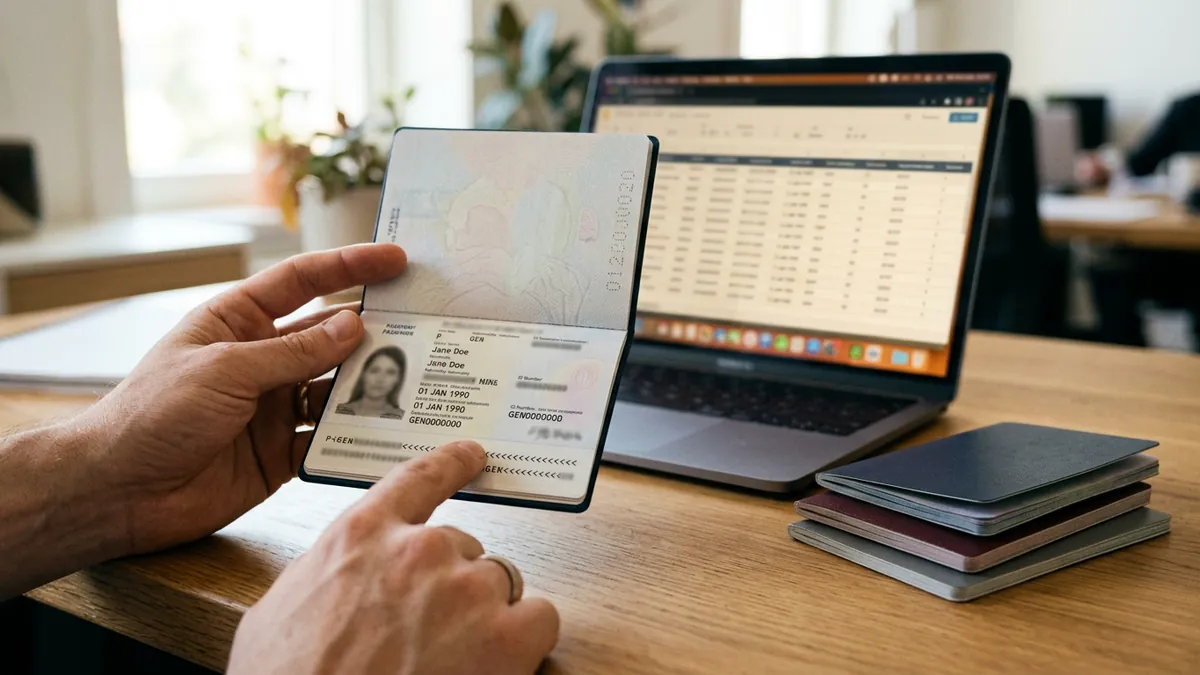
Passport OCR: 10 APIs and SDKs compared in 2026
Koncile, Mindee, Regula, Microblink, ID Analyzer, Klippa, Docsumo, Textract, Document AI and Tesseract compared: documents, MRZ, fraud checks, price.
Read the article →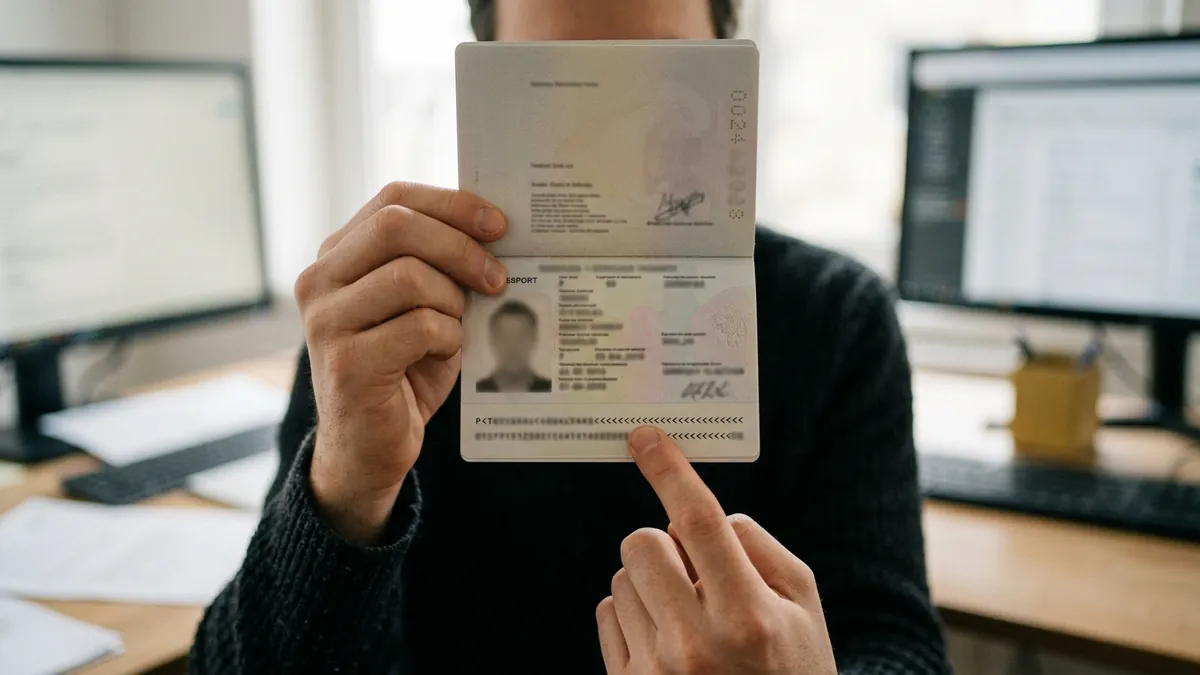
What is the MRZ on a passport or ID card? Format, lines and check digits
What the MRZ (machine readable zone) of a passport means: line 1 and line 2 decoded position by position, check digits, and P or PP codes.
Read the article →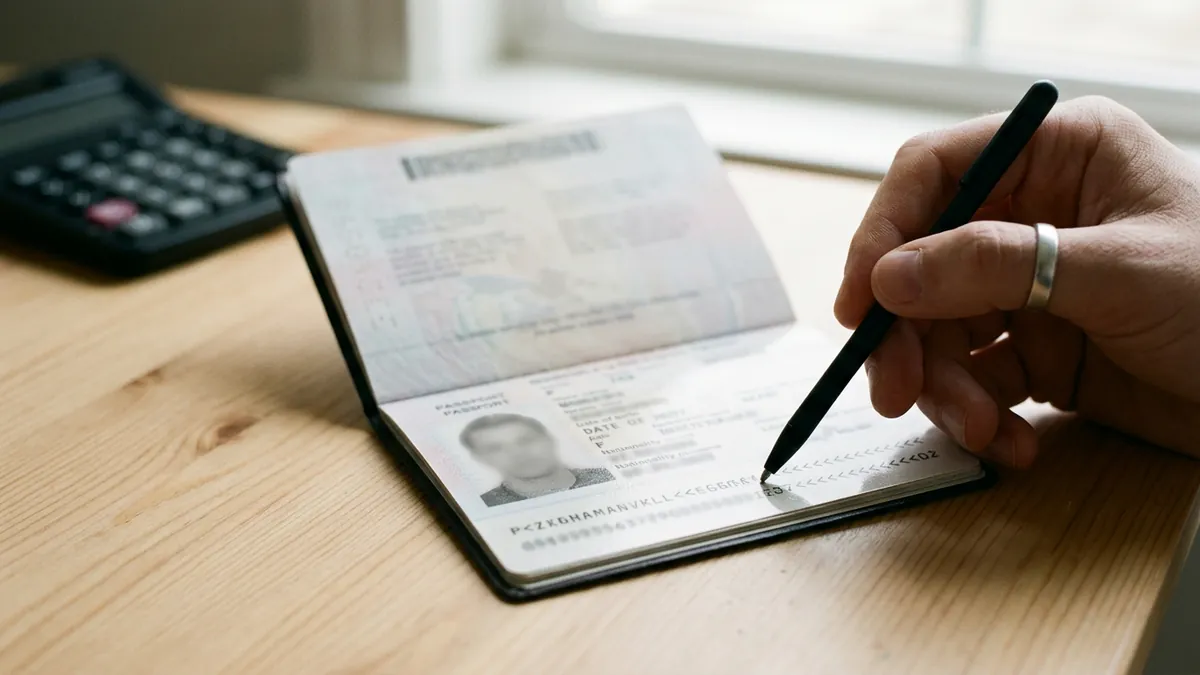
MRZ checksum: how MRZ check digits work, field by field
How the MRZ checksum is computed (weights 7, 3, 1, modulo 10), which fields each check digit covers on passports, ID cards and visas, and what it misses.
Read the article →Frequently asked questions
01What is passport OCR?
Passport OCR (optical character recognition) is software that reads the data page of a passport from an image and returns its content as structured fields: surname, given names, document number, nationality, dates, and the two lines of the machine readable zone. Koncile adds a control layer on top of the reading: the MRZ check digits, the consistency between zones, and a fraud score.
02Does it read ID cards as well as passports?
Yes. National ID cards are read front and back in one request, with their three line MRZ (TD1 format) when they have one, or from the printed fields alone when they do not. Driver licenses and residence permits are read the same way, with a template per document type.
03Which countries are supported?
Any passport that follows the ICAO 9303 standard, which is every machine readable passport in circulation, and ID cards with or without an MRZ. The extraction is not tied to a list of templates: fields are read from the document itself, which is why a new design or a rare country does not need an update on Koncile's side. Non Latin scripts (Arabic, Cyrillic, Chinese, Japanese) are read and can be transliterated.
04What is the MRZ and why does it matter?
The MRZ (machine readable zone) is the strip of characters at the bottom of the data page: two lines of 44 characters on a passport, three lines of 30 on an ID card. It repeats the key fields in a fixed layout with check digits, so software can read it with very high reliability and detect a misread or a modified value. Koncile returns the lines as read and recomputes the check digits.
05Is passport OCR the same as identity verification?
No. OCR reads what is on the document and, with Koncile, tells you whether the file shows signs of modification. Identity verification goes further: it checks that the person presenting the document is its holder (face match, liveness) and may read the chip. Koncile does not do face match or liveness; it is the extraction and document control layer that feeds those steps or replaces them when they are not required.
06How accurate is the extraction?
On key identity fields, Koncile measures a recognition rate above 99 % on readable documents. Reliability drops with glare, a cut MRZ or a blurred photo, which is why each value comes with a confidence level and the doubtful ones are flagged for a human check rather than silently accepted.
07What formats and file sizes are accepted?
PDF, JPG and PNG up to 20 MB, as photos taken with a phone, scanner output or native PDFs. A multi page PDF is read page by page. Both sides of an ID card can be sent as two images in one request.
08What happens to the documents?
They are processed on European infrastructure, deleted after analysis unless your account is set to keep them, and never used to train models. Koncile is SOC 2 Type II audited and GDPR compliant; a data processing agreement is available on request.
09Is there a free trial, and what does it cost after?
Every new account gets 20 free credits, with no credit card. Paid plans start at €199 per month for 1,000 credits; an OCR extraction costs 1 credit per page and a fraud analysis 2 credits per page. Volume pricing is quoted for larger needs. Koncile is a tool for professionals.
Try passport OCR on your own document
Create an account, drop a passport or an ID card, and read the fields, the MRZ and the score within seconds. No card, no call.
Create a free Koncile accountTalk to an expert
20 free credits, no credit card. For professional use only; documents are deleted after analysis.